
Outdoor Fireplaces vs. Fire Pits vs. Fire Tables: What Actually Works for Raleigh Backyards
UPDATED ON: Sept 30, 2026
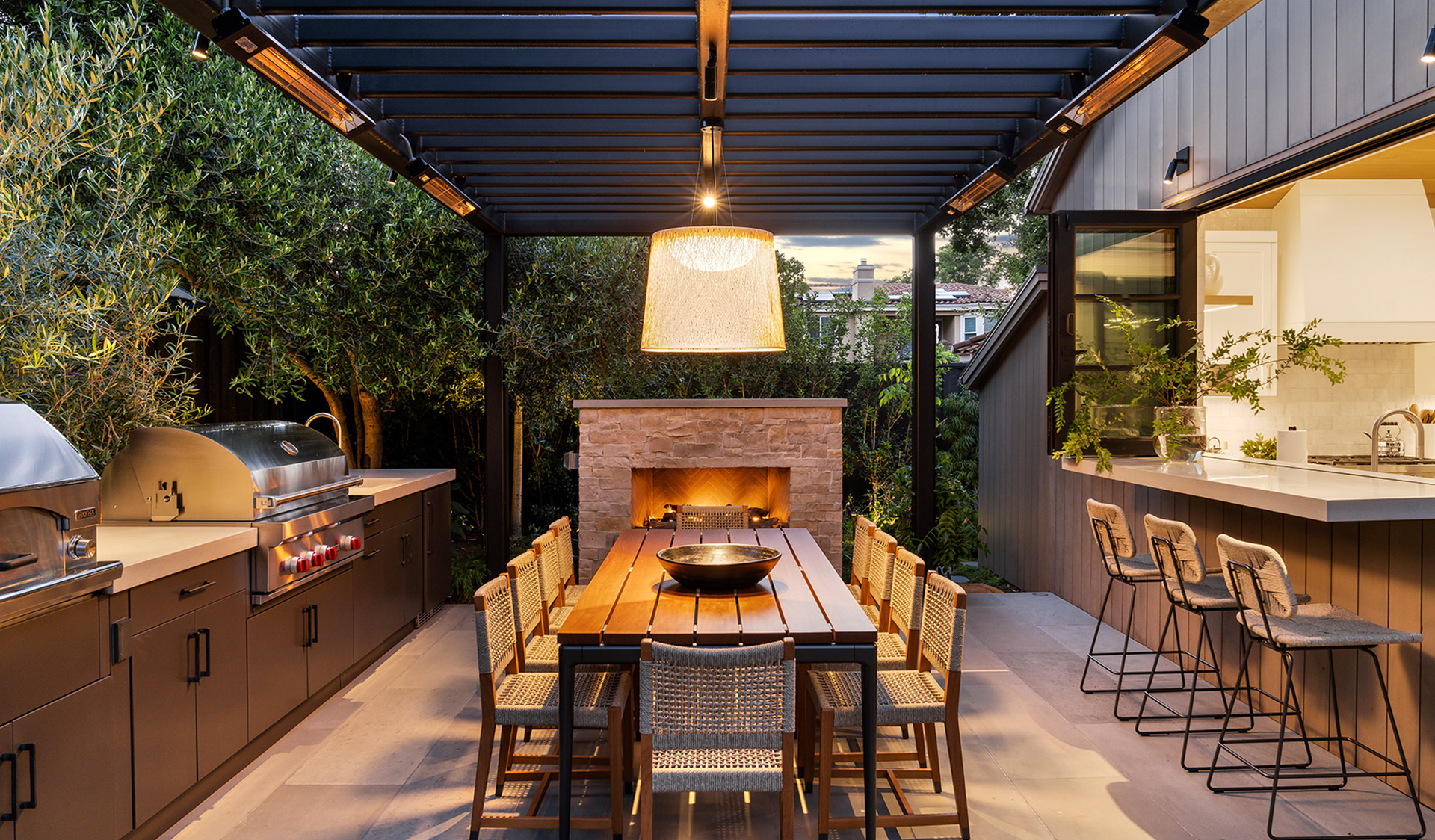
Fall arrives in Raleigh with a specific kind of clarity.
The heat breaks. Evenings get comfortable again. Football weekends fill the calendar. And homeowners who spent all summer in the backyard suddenly find themselves inside by 7:30 because it’s too cool to linger outside without a heat source.
Every October, we hear a version of the same conversation from Raleigh homeowners. We should have added a fire feature this year. We would use the backyard so much more in the fall if we could stay warm out there. Next year, for sure.
The instinct is right. A well-designed fire feature transforms how a backyard gets used, extending the entertaining season from March through November instead of April through September. It also transforms the value of the outdoor space, both financially and in daily quality of life.
The question most homeowners get stuck on is which fire feature actually fits their backyard, their entertaining style, and their long-term plan. Here is an honest look at outdoor fireplaces, fire pits, and fire tables: how they differ, what they cost, and what actually works best for the way Raleigh homeowners live outside.
What Is the Difference Between an Outdoor Fireplace, a Fire Pit, and a Fire Table?
At the highest level, all three formats deliver warmth, light, and atmosphere to an outdoor space. But the differences between them are significant, and they shape everything from cost and permitting to how your family and guests actually gather around them.
- An outdoor fireplace is a permanent, vertical, architecturally-anchored structure. Built from stone, brick, or stucco, it typically includes a chimney and a defined firebox. It functions as a room anchor and directs heat outward from a single wall.
- A fire pit is a lower, horizontal fire feature designed for gathering around from all sides. It can be permanent or portable, wood-burning or gas, and ranges from simple steel bowls to custom-built stone enclosures.
- A fire table is an elevated fire feature integrated into a functional surface such as a coffee table or dining table. Almost always gas-powered, fire tables offer a modern aesthetic and doubled function.
Choosing between them comes down to how you want the space to feel, how you plan to use it, and what your yard, budget, and local rules allow.
Fire Feature Comparison at a Glance
| Feature | Outdoor Fireplace | Fire Pit | Fire Table |
|---|---|---|---|
| Typical cost | $8,000 to $30,000+ | $1,500 to $10,000 | $500 to $5,000 |
| Seating format | Theater (facing fireplace) | Campfire (all sides) | Social (around table) |
| Heat direction | Directional / radiant | Omnidirectional | Ambient / low |
| Permits typically required | Yes | Often | Rarely |
| Wind protection | Strong | Minimal | Minimal |
| Best for HOA restrictions | Varies | Often restricted | Usually allowed |
The Real Difference Is Not What They Look Like. It Is How People Gather Around Them.
A fireplace creates a theater arrangement. Guests face one direction, the fire is the backdrop, and the space naturally organizes itself into intimate conversation groups. This format supports quieter, face-to-face gatherings, romantic evenings, and cozy family time. It defines an outdoor room.
A fire pit creates a campfire arrangement. Seating wraps the center on all sides, and everyone faces inward toward the flames. This is the format for larger groups, casual entertaining, and the shared-experience feeling of gathering around a shared source of warmth. Conversation flows across the fire, laughter carries, and no one is stuck facing a wall.
A fire table splits the difference. It preserves the social geometry of a fire pit but adds a functional surface that lets guests set down drinks, appetizers, or plates. Modern fire tables often feel more like patio furniture with a fire element than a dedicated fire feature.
None of these formats is objectively better than the others. They are answers to different questions about how you want to use your backyard.
Outdoor Fireplaces: The Architectural Anchor
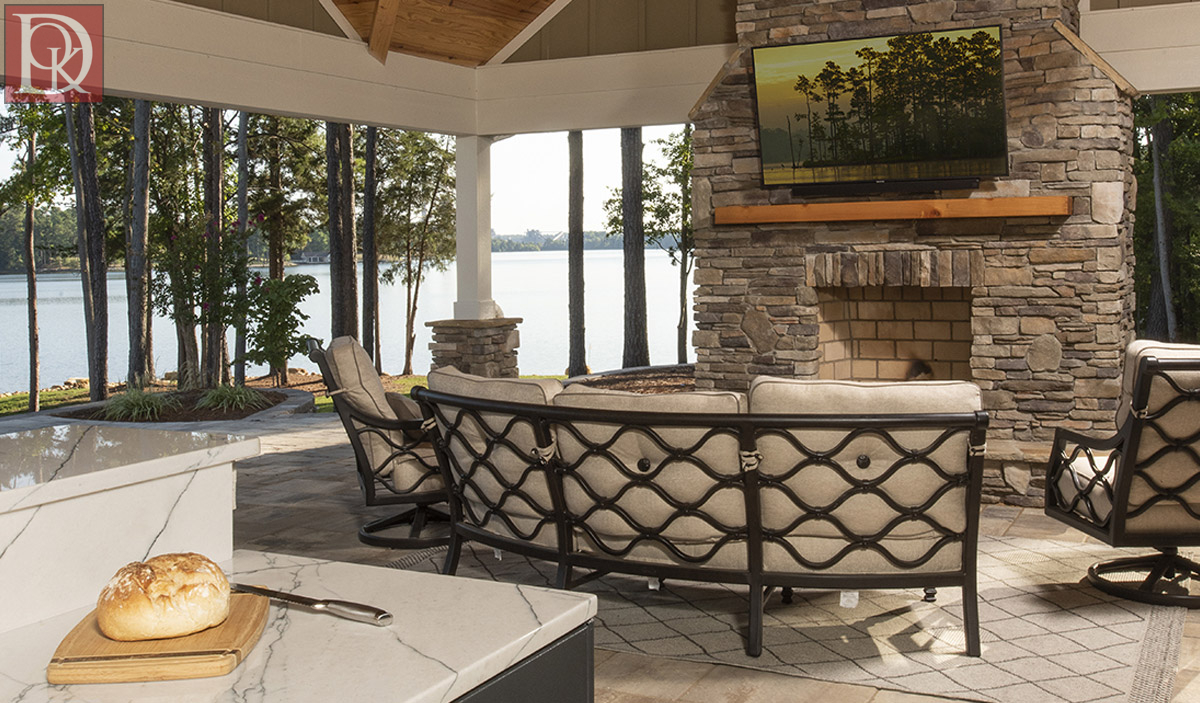
An outdoor fireplace is a permanent, structural addition to your backyard. Built from stone, brick, or stucco with a defined firebox and chimney, it functions as both a functional heat source and a visual centerpiece that the rest of the outdoor space organizes around.
What an Outdoor Fireplace Typically Costs
Custom outdoor fireplaces in Raleigh generally range from $8,000 for a basic gas insert in a stone surround to $30,000 or more for a full architectural stone fireplace with custom chimney, hearth, and integrated seating. Higher-end installations with premium stone selections, larger fireboxes, wood-burning inserts, or integration with covered structures can exceed $50,000.
Where Outdoor Fireplaces Shine
- Covered outdoor kitchens where the fireplace acts as the anchor wall for a defined outdoor room
- Windy or exposed backyards where the fireplace’s vertical structure blocks wind and creates a more comfortable gathering area
- Formal entertaining spaces that want a permanent architectural focal point
- Homes designed for long-term luxury holds where the fireplace becomes part of the home’s permanent architecture and long-term appraised value
- Smoke-sensitive settings since the chimney directs smoke up and away from seating rather than letting it drift across guests
Considerations Before Committing
Outdoor fireplaces are permanent construction and almost always require building permits. Gas fireplaces require gas permits, and wood-burning fireplaces require chimney inspections in most jurisdictions. Structural planning matters: the fireplace’s weight requires proper footings, and integration with covered structures requires engineering. This is a design-build project, not a weekend purchase.
Fire Pits: The Social Center
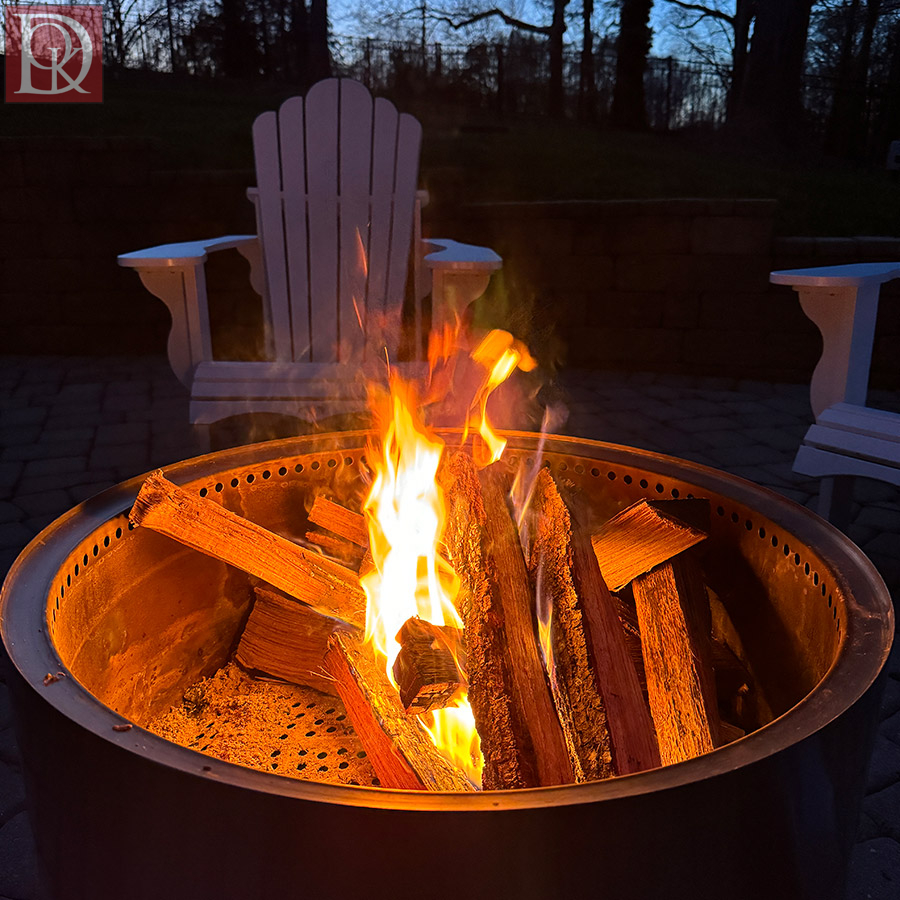
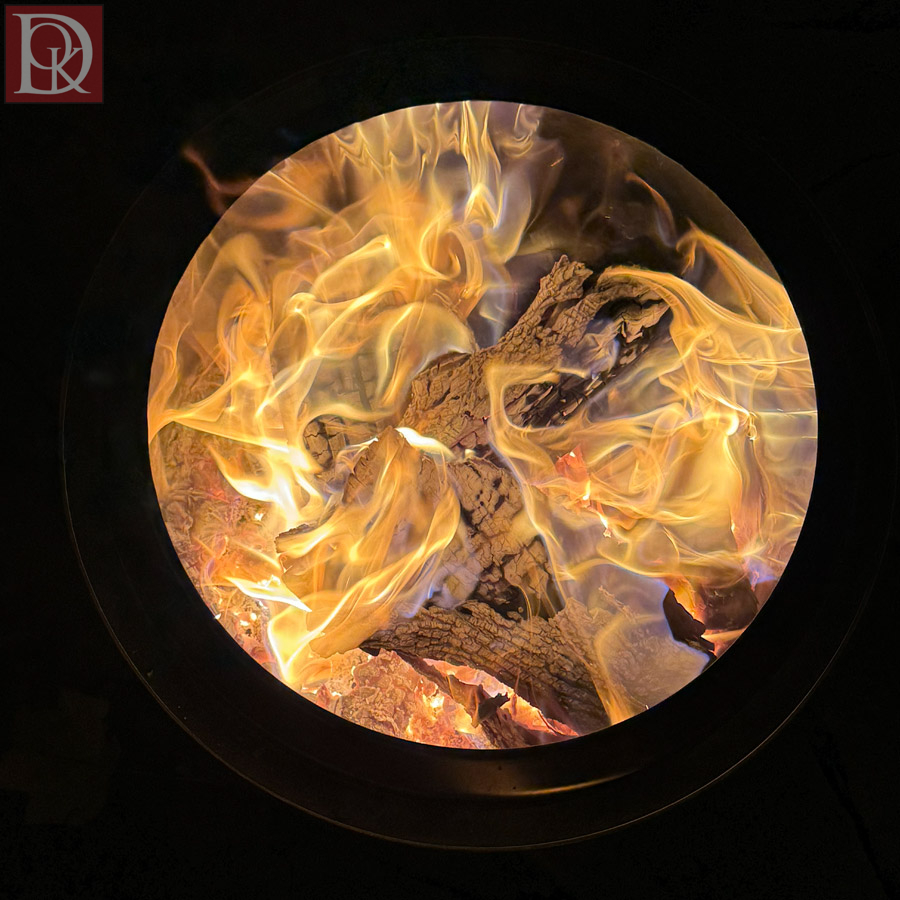
Fire pits are the most versatile and widely-used fire feature format. From simple steel bowls to fully custom stone enclosures, fire pits create the campfire-style gathering experience that many families associate with their best backyard memories.
What a Fire Pit Typically Costs
Portable steel or copper fire pits start under $500. Basic in-ground gas fire pits range from $1,500 to $4,000. Custom-built stone or masonry fire pits with proper drainage, gas connections, and integrated seating typically run $5,000 to $10,000. Wood-burning versions cost less to build but more to operate in terms of ongoing wood supply, ash cleanup, and maintenance.
Where Fire Pits Shine
- Larger groups and casual entertaining where the all-sides seating arrangement encourages open conversation
- Families with kids who want the traditional s’mores-and-stories experience
- Poolside settings where a low-profile fire feature complements a pool without competing visually
- Yards with flexibility where the fire pit can anchor a distinct zone separate from a covered outdoor kitchen
Gas vs. Wood-Burning
Gas fire pits offer instant-on convenience, no smoke, no ash, and easier permitting in most Raleigh-area jurisdictions. Wood-burning fire pits deliver the traditional campfire experience, higher heat output, and a lower construction cost, but they require ongoing wood management, generate smoke that can bother neighbors and drift indoors, and are increasingly restricted by HOA rules in newer Wake County developments. Most Raleigh homeowners we work with choose gas for the day-to-day usability, unless they specifically want the traditional campfire experience.
For clients who want the wood-burning experience without the drift-into-your-clothes smoke, we often recommend a portable smokeless fire pit like a Solo Stove or Breeo. These are engineered to re-burn the smoke as it rises through a secondary combustion zone, which dramatically reduces the smoke output. The practical benefit is simple: your guests do not smell like a campfire at the end of the evening. Even with a smokeless design, we still position these away from the primary lounging space and outdoor kitchen area rather than in the middle of them. Small drift is still drift, and the goal is a backyard where people gather comfortably without ever thinking about smoke. For many families this positioning is the difference between a fire pit that gets used every weekend and one that gets used a handful of times a year.
Fire Tables: The Modern Alternative
Fire tables have quietly become one of the most popular fire feature formats over the past five years, particularly in HOA-governed communities where traditional fire pits face restrictions and permit hurdles. A fire table integrates a small, controlled gas flame into a coffee table or dining table format, delivering ambient warmth, atmospheric flame, and a functional surface without triggering most of the permit and code issues that come with permanent fire features.

What a Fire Table Typically Costs
Off-the-shelf gas fire tables range from $500 to $2,500 depending on size, materials, and BTU output. Higher-end designer fire tables with premium materials and larger fireplaces run $2,500 to $5,000. Custom-integrated fire tables built into a permanent outdoor kitchen or lounge design cost more and are typically scoped as part of a larger project.
Where Fire Tables Shine
- HOA-restricted communities where fire pits and fireplaces face approval hurdles or outright bans
- Smaller patios and courtyards where a full fire pit or fireplace would consume too much space
- Modern architectural aesthetics where the clean, contemporary lines of a fire table fit the design language better than a traditional stone fireplace
- Dual-function seating areas where guests want both a gathering surface and ambient warmth
The Trade-Off
Fire tables generally produce less heat than dedicated fire pits or fireplaces. Standard units run 20,000 to 40,000 BTUs, though premium models reach 60,000 to 65,000 BTUs. For pure warmth on a cool Raleigh evening, a fire pit or fireplace will outperform a fire table. For ambience, style, and easy integration, fire tables often win.
Wind guards are worth talking through before any fire table installation. Most fire tables underperform in windy conditions because the exposed flame gets pushed around and heat dissipates. A properly sized wind guard, whether tempered glass or an integrated shroud, protects the flame, keeps the heat concentrated, and dramatically improves how usable the table is on breezy evenings. It also protects nearby seating and finishes from flare-ups.
Which Fire Feature Is Right for Your Raleigh Backyard?
A few practical questions cut through the decision quickly:
How Do You Actually Entertain?
If you host smaller, more intimate gatherings and prefer face-to-face conversation, a fireplace supports that format better. If you host larger groups and want everyone connected to a shared experience, a fire pit is stronger. If your entertaining varies and you want a fire feature that doubles as functional furniture, a fire table adapts to both.
How Much Yard Space Do You Have?
Outdoor fireplaces need meaningful vertical and horizontal footprint plus clearances for combustible materials. Custom fire pits need at least 8 to 12 feet of open gathering space around them for comfortable seating. Fire tables need only the space they occupy, plus a few feet for chairs.
What Does Your HOA Allow?
Many newer Wake County communities restrict wood-burning fire pits, and some restrict gas fire features tied to gas supply lines. Fire tables tied to propane tanks generally face fewer restrictions. Review your HOA covenants before committing to a permanent fire feature format.
Do You Have or Are You Planning an Outdoor Kitchen?
If you have or are planning a custom outdoor kitchen, the fire feature decision should be made as part of the larger design. A fireplace often anchors a covered kitchen beautifully, while a fire pit works well as a distinct gathering zone separate from the cooking area. Fire tables integrate naturally into lounge zones adjacent to the kitchen. This is where design-build thinking pays off. A fire feature added as an afterthought rarely looks or works as well as one designed into the space from the start.
How Fire Features Relate to an Outdoor Kitchen (And Where They Should Not Sit)
Most content on this topic assumes you should always integrate a fire feature into your outdoor kitchen design. Our experience says the opposite is often true, and it comes back to smoke.
Traditional wood-burning fire pits generate smoke that drifts across seating areas. Putting one inside or adjacent to your outdoor kitchen and lounge zone means your guests end up smelling like a campfire while they eat, and the space stops feeling luxurious the moment the wind shifts. As a rule, we do not integrate traditional fire pits into the same area as an outdoor kitchen for that reason.
Where fire features actually belong in relation to the kitchen:
- Fire tables are the exception. Because they serve a dual purpose (a functional table plus ambient warmth on chilly evenings) and produce almost no smoke, fire tables can integrate directly into the outdoor kitchen area, on a patio adjacent to the cooking zone, or built into bar seating.
- Smokeless wood-burning fire pits (Solo Stove, Breeo) can work near the outdoor kitchen zone because they re-burn the smoke, but we still position them away from the primary lounging space rather than in the middle of it. Small drift is still drift.
- Traditional wood-burning fire pits belong in a separate zone entirely, positioned so prevailing wind carries smoke away from both your seating and your neighbors’ yards.
- Outdoor fireplaces can anchor a covered kitchen when they are chimney-vented and directional, since the chimney sends smoke up and away from guests rather than across the seating area.
The design principle we work from: fire features and outdoor kitchens should each have the space they need, and they should be positioned so smoke never crosses paths with people eating, drinking, or gathering. Getting that geometry right at the design stage is the difference between a backyard people love and one that only works when the wind cooperates.
For a deeper look at how covered outdoor spaces support fire feature integration and year-round use in Raleigh, see our post on Covered Outdoor Spaces: Why Raleigh Homeowners Are Building for All Seasons.
Permits, Setbacks, and Real-World Constraints in Raleigh and the Triangle
Fire feature installations are one of the categories where the difference between a design-build firm with local jurisdictional experience and a generalist really shows. Every fire feature project involves a set of practical constraints that shape what is possible on a specific property, and homeowners rarely think through all of them until they are staring at a design that will not work.
Clearance to Combustibles
Every fire feature has minimum clearance requirements to combustible materials, meaning wood decking, wood siding, wood fencing, roof overhangs, trees, and any structural element that can catch fire. These clearances are defined by manufacturer specifications, local fire code, and often by insurance underwriting. A fireplace or fire pit sited too close to a combustible surface is a code violation, an insurance issue, and a real safety risk. We work through these numbers early in every design so the fire feature location is defensible from all three angles.
Clearance to Property Lines
Setback requirements vary meaningfully by jurisdiction across the Triangle. The Town of Cary, for example, has specific restrictions on how close a fire pit can sit to a residence, and other municipalities have their own rules on property-line setbacks, easement clearances, and neighboring structure distances. What is legal on a property in unincorporated Wake County may not be legal on a similar-sized lot in Cary or in a Raleigh HOA community. A local firm knows which rules apply to your specific address before design begins.
Prevailing Wind Direction
Wind is one of the most overlooked factors in fire feature siting. Prevailing wind direction determines whether smoke drifts toward your gathering area, into your neighbor’s yard, or away from both. A fire pit that looks perfect on a landscape plan can be borderline unusable if it sits downwind of the primary seating area. We think through wind patterns during design so smoke, heat, and radiant warmth flow the way they should.
Fuel Type and Permit Requirements
- Outdoor fireplaces almost always require building permits, and gas fireplaces require separate gas permits. Wood-burning fireplaces typically require chimney inspection and clearance verification.
- Permanent gas fire pits connected to your home’s gas supply require gas permits and inspection, per the same NC building code requirements that apply to any gas appliance connection.
- Wood-burning fire pits are increasingly restricted by HOA covenants in newer Wake County developments and may require Wake County health or fire department review depending on jurisdiction and setback requirements.
- Fire tables using portable propane tanks generally face the fewest restrictions and are often the only permitted format in HOA-governed communities with strict fire feature rules.
The Honest Answer: Some Locations Are Not Good for Fire Features
Part of what we do during a first consultation is walk through whether a fire feature actually makes sense on the site. Some backyards, some lot orientations, some setback constraints, and some prevailing wind patterns simply do not support a good fire feature outcome. When that is the case, we say so directly rather than designing around a problem the homeowner will live with for years. A well-executed fire pit in the wrong location is still a fire pit in the wrong location.
Why Custom-Designed Fire Features Return More
The difference between a fire feature that ages beautifully and one that gets tired within a few seasons comes down to design integration, material selection, and construction quality. The same principles that drive long-term outdoor kitchen ROI in Raleigh apply to fire features. Quality materials hold value. Cohesive integration reads as intentional design. Cheap builds depreciate fast.
Distinctive Outdoor Kitchens is the outdoor design-build sister brand of Distinctive Remodeling, which has served the Raleigh area for over 30 years. Our team designs and builds custom outdoor kitchens, covered structures, and integrated fire features across Raleigh, Cary, Wake Forest, Apex, Durham, and the greater Triangle.
What that local depth means in practice for fire features:
- Material selection that stands up to Raleigh’s humid summers, freeze-thaw winters, and heavy summer rains without cracking, staining, or fading
- Design integration that ties fire features into the home’s existing architecture, landscape, and outdoor kitchen rather than treating them as standalone objects
- Trusted trade partners including our masons, gas fitters, and structural teams we’ve worked with for years, not the cheapest available subcontractor
- Permit expertise across every jurisdiction in the greater Triangle, handled as part of the project scope from day one
- Danver Stainless Outdoor cabinetry and other premium materials that let fire features integrate cleanly with adjacent outdoor kitchen zones for a fully cohesive design
See how fire features integrate into completed projects across our Outdoor Kitchen Gallery to get a sense of what is possible in your own backyard.
Design for the Way You Actually Gather
Every fire feature format has a place, and the right one for your home depends on how you entertain, how much yard you have, what your HOA allows, and how the feature fits into your larger outdoor design.
The homeowners who love their fire feature five years in are almost always the ones who designed it into their outdoor space from the start, rather than adding it as an afterthought. The homeowners who wish they had done it differently are almost always the ones who bought a fire feature first and figured out where it fit later.
If you are thinking about adding a fire feature to your Raleigh backyard, or planning an outdoor kitchen where a fire feature would be an anchor element, the best next step is a conversation. Visit our Raleigh showroom on Duraleigh Road to see materials, fire feature examples, and full kitchen integrations in person, explore typical investment ranges in our Outdoor Kitchen Pricing Guide, or Contact Us to schedule a design consultation. Fall is exactly the right time to plan the space you will use every evening next year.
FAQ: Outdoor Fire Features in Raleigh
What is the difference between an outdoor fireplace, a fire pit, and a fire table?
An outdoor fireplace is a permanent, vertical, architecturally-anchored structure with a defined firebox and chimney, functioning as a room anchor with directional heat. A fire pit is a lower, horizontal fire feature designed for gathering from all sides, available in wood-burning or gas formats. A fire table integrates a controlled gas flame into a functional surface such as a coffee or dining table, offering ambient warmth with modern aesthetics. Each format creates a fundamentally different social gathering experience and carries different cost, permitting, and installation requirements.
How much does an outdoor fire feature cost in Raleigh?
Custom outdoor fireplaces in Raleigh typically range from $8,000 to $30,000 or more, with premium installations exceeding $50,000. Fire pits range from under $500 for portable steel or copper models to $10,000 for custom-built stone or masonry installations. Fire tables run $500 to $5,000 depending on size, materials, and BTU output. Costs vary based on scope, materials, integration with existing outdoor spaces, and site conditions.
Which fire feature is best for larger groups or entertaining?
Fire pits are typically the best choice for larger groups because the campfire-style seating arrangement wraps around all sides, allowing guests to face each other and encouraging open conversation across the fire. Outdoor fireplaces work better for smaller, more intimate gatherings with face-to-face conversation. Fire tables adapt to both formats and often serve as flexible additions to lounge or dining zones adjacent to an outdoor kitchen.
Do I need a permit for a fire feature in Raleigh?
Outdoor fireplaces almost always require building permits, and gas fireplaces require separate gas permits. Permanent gas fire pits connected to a home’s gas supply require gas permits and inspection. Wood-burning fire pits face increasing HOA restrictions in newer Wake County developments and may require setback or fire department review depending on jurisdiction. Setback requirements vary meaningfully between municipalities: the Town of Cary, for example, has specific rules on how close a fire pit can sit to a residence, and requirements in Raleigh, Apex, Wake Forest, and unincorporated Wake County can differ. Fire tables using portable propane tanks generally face the fewest permit requirements and are often the only permitted format in strict HOA communities.
What is the difference between a gas and wood-burning fire pit?
Gas fire pits offer instant-on convenience, no smoke, no ash cleanup, and easier permitting in most Raleigh-area jurisdictions. Wood-burning fire pits deliver a traditional campfire experience with higher heat output and lower construction cost, but they require ongoing wood management, generate smoke that can bother neighbors, and are increasingly restricted by HOA covenants. Most Raleigh homeowners choose gas for day-to-day usability, unless they specifically want the traditional campfire experience for occasional use.
Can I add a fire feature to my existing outdoor kitchen?
Yes, though the design integration is best planned as part of the original outdoor kitchen scope. Adding a fire feature to an existing kitchen usually requires new gas line work, permit review, and structural or landscape modifications to accommodate the new element. A design-build firm can evaluate your existing kitchen and yard to determine whether a fireplace, fire pit, or fire table would integrate best without requiring significant demolition or reconfiguration.
Do outdoor fire features add value to a Raleigh home?
Yes. Outdoor fire features are consistently among the most-requested backyard amenities for homes across the Triangle, particularly in luxury neighborhoods like North Hills, Five Points, Inside the Beltline, and mature Cary communities. Custom outdoor fireplaces integrated with covered structures or outdoor kitchens deliver the strongest return, both because they read as permanent architectural additions and because they extend the usable outdoor season by several months. See our post on outdoor kitchen ROI in Raleigh for detail on how backyard investments perform at resale.
What is the first step to designing a custom fire feature for my Raleigh backyard?
Visit our Raleigh showroom on Duraleigh Road to see materials, fire feature examples, and outdoor kitchen integrations in person. From there, schedule a design consultation with our team to discuss your specific yard, entertaining style, HOA situation, and how the fire feature fits into your larger outdoor design. Fall is the ideal planning window for a fire feature project you want ready by spring or summer of the following year.